Trazabilidad de modelos y decisiones
Publicado el: 2026-04-11 17:58:57
La toma de decisiones automatizada parece simple desde fuera. Entra una solicitud. Sale una decisión.
En producción, los sistemas de decisión evalúan cientos de condiciones, reglas y transformaciones de datos antes de devolver un resultado. Sin un trazado adecuado, nadie puede responder una pregunta básica:
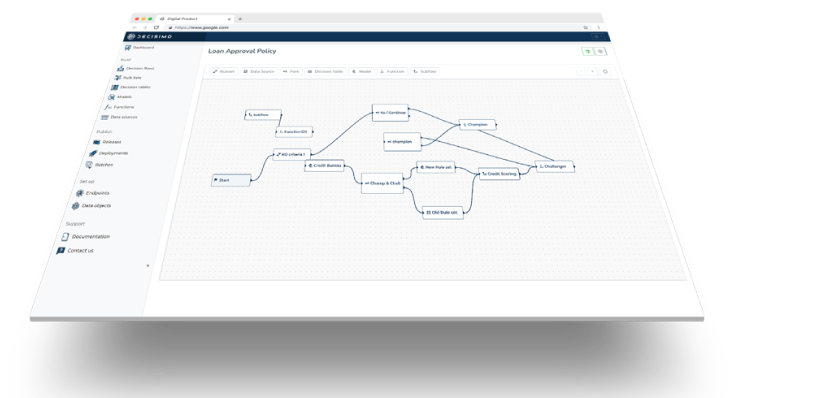
¿Por qué el sistema llegó a esta decisión?
Los bancos, las fintech y las aseguradoras se enfrentan a esta pregunta todos los días. Los reguladores la hacen. Los equipos de riesgo la hacen. Los clientes la hacen.
La respuesta requiere trazabilidad completa de las decisiones a lo largo de todo el flujo de decisión.
Este artículo explica qué significa el trazado en la práctica y cómo se aplica a las distintas etapas de la lógica de decisión automatizada.
Qué es realmente un decision trace
Un decision trace registra el recorrido completo que siguió una decisión a través del sistema.
Esto incluye:
- datos de entrada usados en la evaluación
- reglas evaluadas y sus resultados
- cálculos intermedios
- respuestas de API externas
- resultado final de la decisión
Cada paso pasa a formar parte de un registro auditable.
Un trazado adecuado permite al equipo reconstruir una decisión meses después y mostrar exactamente cómo se ejecutó la lógica.
En sectores regulados, esto no es opcional. Normativas como GDPR y DORA exigen explicabilidad para las decisiones automatizadas que afectan a los clientes.
Etapa 1: evaluación de los datos de entrada
Toda decisión automatizada comienza con datos de entrada.
Entre los ejemplos se incluyen:
- datos de una solicitud de préstamo
- historial de transacciones de una cuenta bancaria
- resultados de verificación de identidad
- respuestas de burós de crédito
- puntuaciones internas de riesgo
Antes de ejecutar cualquier regla de negocio, el sistema comprueba la calidad y la estructura de los datos.
Las comprobaciones típicas incluyen:
- campos faltantes
- formatos no válidos
- valores incoherentes
- datos obsoletos
Un trazado debe registrar:
- las entradas en bruto recibidas
- cualquier transformación aplicada
- los resultados de la validación
Entrada: Ingreso mensual = 4,200
Origen: formulario de solicitud
Validación: aprobada
Transformación: convertido a entero
Sin este paso, los equipos no pueden saber si una decisión falló por una mala entrada o por la lógica de las reglas.
Etapa 2: ejecución de la lógica de decisión
Una vez validados los datos de entrada, el sistema ejecuta la lógica de decisión.
Esta lógica suele consistir en:
- árboles de decisión
- tablas de decisión
- conjuntos de reglas
- lógica condicional
- cálculos de puntuación
Una lógica de suscripción de ejemplo podría incluir reglas como:
SI credit_score < 580
ENTONCES rechazar solicitud
SI debt_to_income_ratio > 45%
ENTONCES marcar para revisión manual
Un decision trace registra:
- cada regla evaluada
- el resultado de la regla
- el orden de ejecución
Regla: credit_score_check
Condición: credit_score < 580
Resultado: false

Regla: debt_to_income_check
Condición: debt_to_income_ratio > 45%
Resultado: true
Resultado: revisión manual
Este trazado explica la decisión en términos exactos.
Etapa 3: datos externos y orquestación de API
Los flujos de decisión modernos rara vez dependen solo de datos internos.
A menudo llaman a servicios externos como:
- burós de crédito
- sistemas de detección de fraude
- APIs de agregación de cuentas bancarias
- proveedores de verificación de identidad
Cada llamada afecta al flujo de decisión.
Secuencia de ejemplo:
- Recuperar el historial de transacciones bancarias
- Calcular la estabilidad de ingresos
- Ejecutar señales de fraude
- Actualizar la puntuación de riesgo
Un trazado adecuado registra:
- el endpoint de API llamado
- los parámetros de la solicitud
- los datos de respuesta
- los resultados de la evaluación
Llamada API: transaction_analysis_service
Transacciones analizadas: 540
Ingreso mensual detectado: 4,180
Puntuación de estabilidad de ingresos: 0.87
Si un servicio externo falla o devuelve datos inesperados, el trazado muestra el punto exacto de fallo.
Etapa 4: métricas derivadas y resultados del modelo
Muchos sistemas de decisión calculan métricas derivadas antes de tomar una decisión final.
Entre los ejemplos se incluyen:
- ratio deuda-ingresos
- volatilidad de las transacciones
- tendencia de ingresos para cuentas empresariales
- puntuación de riesgo de fraude
- puntuación de asequibilidad
Estos cálculos suelen combinar varias entradas.
Ratio deuda-ingresos
= obligaciones mensuales totales / ingreso verificado
= 1,950 / 4,180
= 46.6%
El trazado debe incluir:
- las fórmulas usadas
- los valores intermedios
- los resultados finales de las métricas
Esto permite a los equipos de riesgo verificar que los cálculos se comportaron como se esperaba.
Etapa 5: decisión final y resultado
Tras evaluar las reglas, los datos y las métricas derivadas, el sistema devuelve una decisión.
Los resultados típicos incluyen:
- aprobar
- rechazar
- revisión manual
- solicitar información adicional
El trazado registra:
- la decisión final
- la regla o condición que la activó
- la versión del ruleset usada
Decisión: manual_review
Activada por: debt_to_income_check
Versión del ruleset: v3.14
Marca temporal: 2026-03-09T10:32:14
El control de versiones importa. La lógica de decisión cambia con el tiempo. Un trazado debe vincular cada decisión con la versión exacta de las reglas activas en ese momento.
Etapa 6: análisis posterior a la decisión
El trazado no termina después de la decisión.
Las organizaciones analizan los trazados para mejorar el rendimiento y los modelos de riesgo.
Distribución de decisiones
Preguntas de ejemplo:
- ¿Qué porcentaje de solicitudes pasan a revisión manual?
- ¿Qué reglas rechazan más solicitudes?
Efectividad de las reglas
Los equipos analizan qué reglas se activan con más frecuencia y si producen resultados correctos.
Regla: income_instability_flag
Activada: 22% de los casos
Resultado de revisión manual: 81% rechazo
Monitorización del modelo
Si un modelo alimenta la lógica de decisión, los trazados ayudan a detectar desviaciones.
Señales de ejemplo:
- cambios en la distribución de la puntuación de riesgo
- aumento inusual de las alertas de fraude
- picos repentinos de aprobaciones
Sin datos de trazado, diagnosticar estos cambios se vuelve difícil.
Por qué importa la trazabilidad
Muchos sistemas pueden producir decisiones. Pocos pueden explicarlas.
La trazabilidad ofrece a los equipos tres ventajas operativas.
1. Preparación para auditorías
Los reguladores suelen pedir pruebas de que las decisiones siguen reglas documentadas. Un decision trace proporciona exactamente eso.
2. Depuración más rápida
Cuando una decisión parece incorrecta, los equipos pueden inspeccionar el trazado y ver qué regla se activó y qué datos la provocaron.
3. Cambios de reglas más seguros
El historial de trazados permite a los equipos comparar decisiones antes y después de los cambios de reglas.
Decisiones deterministas frente a modelos de caja negra
Muchas organizaciones usan modelos de machine learning dentro de los flujos de decisión. Estos modelos suelen actuar como cajas negras.
La lógica de decisión determinista mantiene explicable la decisión final. Los modelos pueden dar señales, pero las reglas determinan el resultado.
SI fraud_model_score > 0.82
Y transaction_velocity > threshold
ENTONCES rechazar pago
El modelo produce una señal. La lógica de decisión la interpreta. El trazado registra ambos pasos.
El estándar operativo para los sistemas de decisión
Para que la toma de decisiones automatizada funcione en entornos de producción, importan cuatro propiedades:
- Determinismo
- Trazabilidad
- Explicabilidad
- Control de versiones
Sin estas propiedades, las decisiones automatizadas se vuelven difíciles de confiar.
Reflexión final
La automatización aumenta el volumen de decisiones. Los bancos y las fintech ahora ejecutan millones de evaluaciones automatizadas cada mes.
Sin un trazado adecuado, esas decisiones se vuelven opacas.
Con trazabilidad, los equipos pueden reconstruir la ruta exacta de ejecución de cualquier decisión y explicarla meses después.
Esa es la diferencia entre decisiones automatizadas y sistemas de decisión auditables.