Step-by-Step Guide to Automating the Loan Approval Process
Published on: 2024-08-10 19:04:56
Are you still stuck with manual steps in your loan approval process? If so, you are not alone. It may be time to change that.
Automating this process is necessary to keep up with industry demand. It also improves the accuracy and efficiency of your operations.
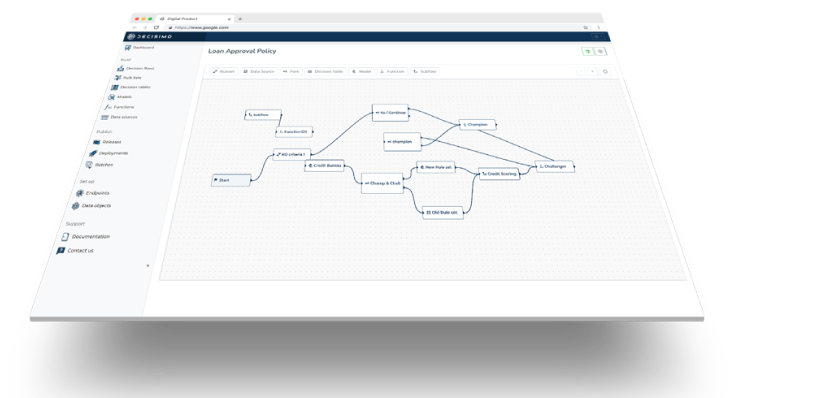
This guide walks through the steps to automate your loan approval process, from understanding how the process works today to formalizing policy changes.
By the end, you will have a clear roadmap for a smoother, more efficient loan approval process. Let’s start.
Step 1: Embarking on the Journey to Automation
As you start automating the credit underwriting process, first understand what credit officers actually do when they review a loan application.
A written credit policy may exist, but it may not reflect the process people follow in practice.
Spend time observing credit officers. You may find informal evaluation steps that are missing from the documented policy.
This helps you identify gaps in the current system that need attention, and reduces the risk of weaker performance during automation.
Step 2: Identifying Key Processes and Checks
As you work to automate the credit underwriting process, identify the main checks and process steps first.
Start with the "knock-out" (KO) criteria and automate those checks first. These are the checks that immediately disqualify a loan application from further review if they are not met.
Documenting and automating the required KO criteria puts the process on solid ground.
Step 3: Assessing Data Availability
Next, assess whether the data needed to implement the practical rules is available.
This includes credit history, income, employment, and other financial information used to evaluate a loan application.
If needed, take steps to make sure this data can be collected efficiently.
Step 4: Implementing the Rules
Now it is time to implement the rules and automate the credit underwriting process.
You can do this by hard-coding the rules into the loan management system or by using a rule engine.
The implementation should follow the checks and process steps identified in step 2, and it should make sure all required KO criteria are enforced.
Step 5: Formalizing Policy Changes and Impact Assessment
As you approach the final step, formalize the policy change approval process. This helps ensure changes are tested before they go live.
Monitor the impact of each change. Compare expected impact with actual impact, assess the effect on the approval rate, and assess the effect on risk performance.
Why you may not want to automate everything
As you work toward automating the loan approval process, remember that not everything needs to be automated right away.
In step 4, after identifying and automating the rules, you may find that some parts of the credit underwriting process still need manual review. That is fine.
Automation is not a one-time project where everything changes at once. A step-by-step approach works better. Collect data continuously, and automate more over time.
Working step by step helps you make informed decisions and avoid deterioration in risk performance.