6 reasons to use a rule engine instead of Python code
Published on: 2024-08-10 18:36:09
Some companies start by keeping decision logic in code and continue that way, often with Python. Over time, this can become hard to manage, and moving to a rule engine may be the better choice. There are many reasons to use a rule engine:
Save time and resources
Writing and maintaining custom Python code takes time and effort, especially in a large financial company with many systems and processes. By using a rule engine, the company can automate many of these processes and reduce the work needed to maintain them. That frees up resources for other important tasks, such as developing new products and services or improving customer experience.
Improve accuracy and consistency
Rule engines are built to apply rules in a reliable, consistent way. They help make sure the company’s systems and processes run correctly and efficiently. This helps prevent errors that can have serious consequences in financial services. They can also help the company stay compliant with regulatory requirements, which matters for maintaining the trust of customers and regulators.
Provide flexibility and adaptability
Rule engines are configurable, and they can be updated to match changing business needs and requirements. This helps the company stay agile and respond to new challenges and opportunities in financial services. Using a rule engine can also make it easier to integrate systems and processes with those of other organizations.
Improve collaboration and sharing
Rule engines are often built for multiple users and teams, and they provide a central platform for managing and sharing rules and policies. This can improve collaboration and communication within the company. It can also make it easier to share rules and policies with other organizations, such as regulators or partners.
Reduce the risk of security breaches and vulnerabilities
Rule engines are typically designed with security controls in place, and they can help protect the company’s systems and data from unauthorized access and attacks. This reduces the risk of security breaches and vulnerabilities, which can have serious consequences for the company and its customers. Using a rule engine can also help the company comply with security standards and regulations, which matters for maintaining trust.
Manage complexity
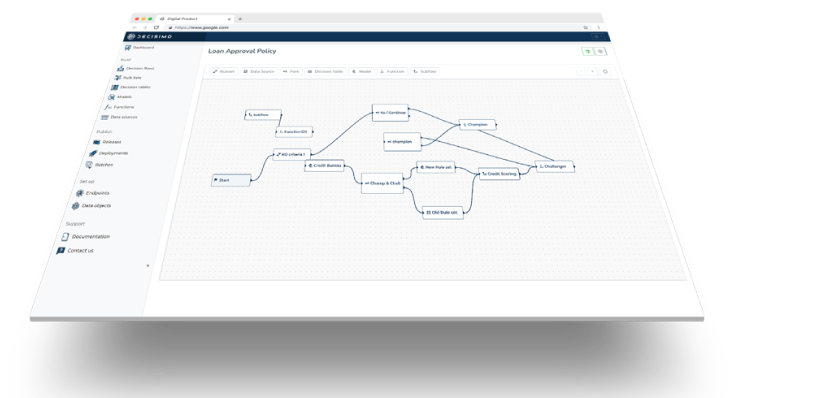
When a system needs to handle many complex rules, rule engines provide the structure needed to make sure all rules are applied and maintained correctly. Rule engines with a clear user interface also make it easier for business users to review and work with decision logic than Python code.
Conclusion
Using a rule engine can save time and resources, improve accuracy and consistency, provide flexibility and adaptability, improve collaboration and sharing, reduce the risk of security breaches and vulnerabilities, and help manage complexity. That makes it a strong choice for organizations that want to streamline and automate their systems and processes while helping ensure compliance with regulatory requirements.