Decision Engineer: role, skills, and impact in automated decision making
Published on: 2024-08-10 18:36:47
A decision engineer designs and builds decision models for automated decision-making processes.
They work with data, rules, and algorithms to create models that systems use to make decisions against defined criteria.
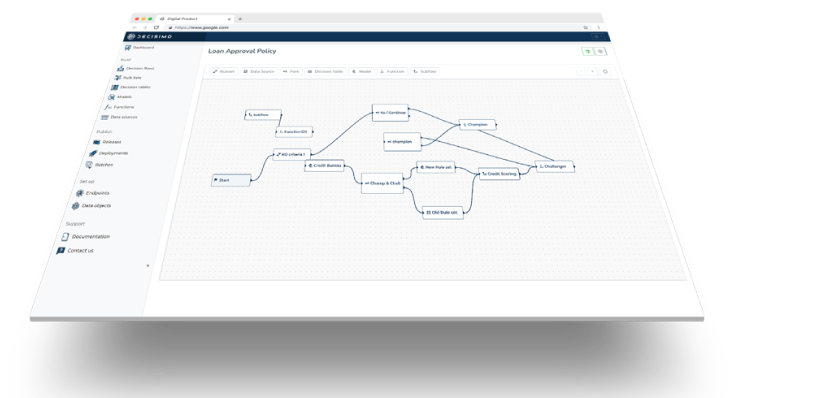
The goal is to build decision models that are transparent, explainable, and aligned with business objectives.
What are the skills necessary
The role combines technical and business skills. On the technical side, a decision engineer needs:
- Strong knowledge of data analytics and algorithms: They can collect, process, and analyze large datasets to build models on accurate, relevant inputs.
- Expertise in programming languages: Proficient in at least one of Python, R, or SQL, with experience in machine learning libraries and frameworks.
- Understanding of artificial intelligence and machine learning: A clear grasp of core principles and when to apply them to decision models.
- Ability to communicate technical concepts to non-technical stakeholders: Explain complex logic clearly so others can understand it and act on it.
What about soft skills
Alongside technical abilities, a decision engineer should have:
- Practical field knowledge and situational awareness: Understand where decisions run, who they affect, and the operating context to keep models relevant.
- Strong communication and problem-solving skills: Work across teams and turn business problems into clear decision logic.
- Ability to present decision models in a clear and understandable way: Present models, assumptions, and results so teams can implement them correctly.
Why situational awareness is important
Situational awareness is an important part of the decision engineer role.
It means understanding the context in which decisions and outcomes happen, including the environment, stakeholders, and business goals.
Strong situational awareness helps the decision engineer build models that are relevant, effective, and aligned with business objectives.
How to build situational awareness
To build strong situational awareness, a decision engineer should take these steps:
- Gather information: Research the business environment, stakeholders, and goals. Speak with subject matter experts, review data and reports, and conduct stakeholder interviews.
- Identify decision points: Map the key points in the decision-making process where automation applies, from simple rules to more complex machine learning models.
- Analyze situational levers: Review the factors that drive outcomes at each decision point, including data inputs, rules, and criteria. Use this to design effective models aligned with goals.
- Validate situational awareness: Test the decision models and compare outcomes to expectations. Adjust and refine them as needed.
Why Every Company Needs a Decision Engineer
Automated decision-making plays a major role in many businesses today.
With a mix of technical and business skills, decision engineers keep decision models transparent, explainable, and aligned with company goals.
Any company involved in decision intelligence benefits from a decision engineer to design, test, and maintain decision logic at scale.
Future outlook
The outlook for decision engineers is positive, with growing demand for automated decision-making.
Their responsibilities will expand as models and integrations grow more complex. As agentic decisioning spreads, autonomy across services and agents increases branching and feedback loops. Decision traces, explainability, and analysis of how decisions ran become harder to manage, so engineers must design for full decision traces, versioned rules, and reproducible runs.
Ethics and transparency in decision-making will remain important. Decision engineers need to stay informed and apply responsible, ethical principles in their models.