Why segmented pre-collection activity matters for lending businesses
Published on: 2024-08-10 18:35:48
What is pre-collection
Pre-collection is a proactive approach to managing unpaid debt before an account becomes delinquent. The goal is to stop accounts from entering the collections process by reminding the borrower, or by agreeing a payment plan or another arrangement before delinquency starts.
By contacting accounts before they become delinquent, a lending business can improve cash flow and reduce costs linked to collections.
Why segmented pre-collection activity is important
Segmented pre-collection activity matters for several reasons. By splitting accounts into manageable groups, businesses can target their collection efforts with more precision.
A lender can use segmentation to prioritize accounts that are more likely to become delinquent. This lets the lender focus resources on accounts with a higher risk of non-repayment, which can improve recovery rates.
Segmentation can also help businesses tailor collection efforts to the needs of each borrower, which improves the chances of a successful outcome.
Most importantly, not all customers need a reminder. Contacting every customer can annoy people who were going to pay on time anyway. Segmentation helps identify who should be contacted, which saves time and money.
Ways to do pre-collection
There are many ways to do pre-collection. Common methods include:
- sending emails
- sending instant messages (WhatsApp, Facebook Messenger, Telegram) or SMSs
- making automated phone calls using IVR or voice bots
There are also other, more costly and older methods:
- making phone calls
- visiting in person
- working with outside agencies
- hiring a debt collection law firm
How to do pre-collection segmentation
There are several ways to segment accounts for pre-collection. A common method is to segment by account balance, with higher-risk accounts often being those with larger balances.
Other ways to segment accounts include payment history, credit score, demographic information, or debt type.
Once accounts are segmented, the next step is to decide how to contact each group.
How to do it technically?
The technical implementation can be done by extracting data daily from your core system. Useful data for segmentation can include:
- maximum days past due
- average days past due
- remaining balance
- monthly repayment
- historical contact types and which ones led to success
Predictive scoring
A company can also build a machine learning model to estimate the probability that a borrower will forget a repayment. The dependent variable can be a binary flag, such as “did the customer repay on time?”. The target variable should focus on short-term repayment probability, so you should consider only a small number of days, for example 10. This dataset can then train a machine learning model that predicts the probability of timely repayment.
After the model is trained, it can be used daily to score all accounts and select a subset based on both segmentation logic and a repayment score.
Making it all work
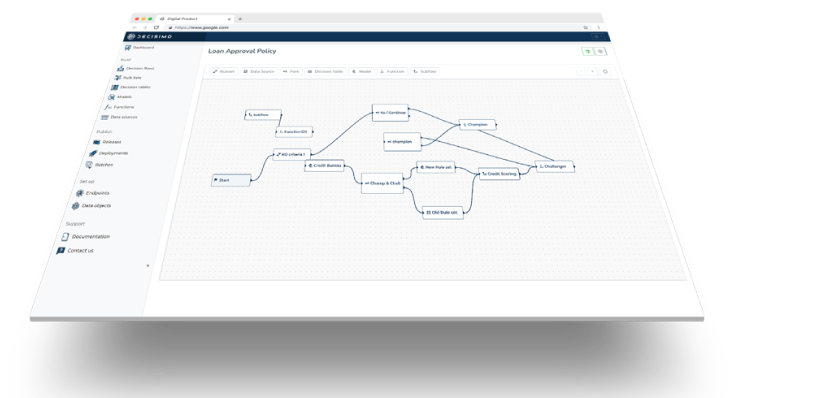
The calculation can be done either as an ETL process in a data warehouse or as a batch processing task using a decision engine.
A decision engine makes it possible to choose the best contact method for each customer based on the customer’s characteristics and the model output.