Promise to Pay in Consumer Lending: How to Track, Test, and Improve Collections
Published on: 2026-04-05 18:24:15
Promise to Pay is a collection signal, not a collection outcome
In consumer lending, Promise to Pay is the commitment a customer makes after becoming overdue. It gives the collections team a next step. It also creates a measurable event that can be tracked, segmented, and improved.
Promise to Pay should not be treated as a soft win. It only matters if the customer pays on time, and the team can trace what happened between first contact and final outcome. That means collections teams need clear decision logic, consistent call handling, and accurate records for every interaction.
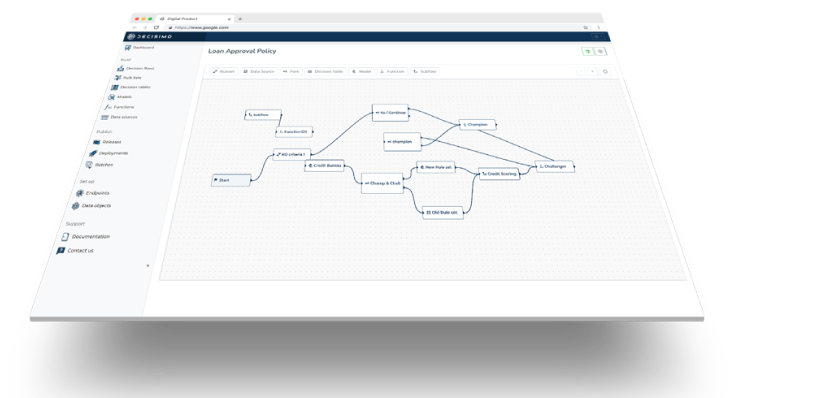
For early-stage collections, this matters even more. The first calls often determine whether the case moves toward recovery, restructures into a new payment path, or falls into a broken promise workflow. If the process is loose, the data becomes unreliable, and the team loses control over performance.
Structure matters more than improvisation
Collections teams often want agents to sound natural. That is fine. It is not a reason to remove structure. A good process gives agents a defined path and room to respond to the customer’s situation.
Junior agents can handle first contact and standard Promise to Pay calls. Experienced agents should handle broken promises, payment disputes, hardship cases, and situations that need a revised repayment path. This split reduces errors and makes escalation rules easier to audit.
A structured process should define:
- When a Promise to Pay is recorded
- What terms count as valid
- When a promise is considered broken
- Who owns the follow-up
- Which actions are allowed after a broken promise
Without these rules, teams end up with inconsistent treatment across similar cases. That hurts recovery rates and makes performance reviews harder. It also weakens explainability, because no one can clearly say why one customer got one treatment and another got something different.
Call scripts create consistency
Collection call scripts help agents keep the conversation on track. They also reduce variation in how the team asks for a Promise to Pay. That matters because small differences in phrasing can change customer responses, especially in high-pressure calls.
The right script is not a rigid monologue. It is a decision flow. It should guide the agent through the key steps of the call while leaving room for the customer’s situation. The goal is consistency in structure, not mechanical repetition.
What a good collection script should cover
- Identity and account verification
- Reason for delinquency
- Current payment ability
- Expected payment date
- Partial payment options, if allowed
- Confirmation of the Promise to Pay terms
Scripts should also define what the agent must not say. Promising unsupported concessions, changing terms without approval, or improvising legal or accounting language creates risk. In collections, freeform language is often where process breaks begin.
If you want a related view on how structured workflows affect collections stages, see A Practical Guide to Collections Stages in Lending.
Freestyling makes performance harder to measure
When agents deviate from the script, the team loses comparability. One agent may secure a Promise to Pay by offering a payment split. Another may use a softer tone. A third may skip critical questions. If the process is not standardized, you cannot tell which variable drove the result.
That creates three problems.
- Outcomes become harder to attribute to the script, the agent, or the channel
- Training becomes inconsistent because there is no stable baseline
- Quality assurance loses precision because the review criteria are unclear
Freestyling also makes segmentation weaker. If the same customer profile receives different treatment depending on the agent, the team cannot learn which approach works best. Data quality drops. Decision quality follows.
What to do when Promise to Pay is broken
A broken Promise to Pay is not just a missed payment. It is a signal that the original plan failed. The next step should depend on the customer profile, the amount overdue, the stage of delinquency, and the operational rules of the lender.
One option is loan restructuring. That can make sense in some cases, but it can also create accounting and provisioning issues depending on jurisdiction and internal policy. Some markets require strict treatment once a loan is reclassified. Collections teams should not improvise this decision.
Another option is to split the payment into smaller installments inside the original repayment schedule. This can be easier to manage operationally and may keep the account moving toward recovery without changing the underlying loan structure. It can also improve the customer’s view of the lender if the process feels realistic rather than punitive.
The right decision depends on rules, not instinct. A rule engine can apply those rules consistently and keep the logic auditable. For a broader view on how rules support lending operations, see 6 reasons to use a rule engine instead of Python code.
Champion-challenger testing makes Promise to Pay better over time
The champion-challenger approach is useful because collections processes should not stay static. A script, channel, or escalation path that works today may underperform next quarter. Customer behavior changes. Portfolio mix changes. Collection performance changes with it.
In a champion-challenger setup, the team keeps one current approach as the champion and tests one or more alternatives as challengers. The team then compares results using defined metrics. For Promise to Pay, those metrics may include:
- Promise to Pay rate
- Kept promise rate
- Time to payment
- Right-party contact rate
- Roll-rate after broken promise
This is where data becomes operational. Instead of debating whether a new script sounds better, the team can see which version performs better on actual accounts.
If you want a deeper look at testing decision logic, see Using Champion x Challenger in decision strategies.
Channel choice should be based on results, not habit
Many collections teams default to phone calls because that is what they know. Phone is important, but it is not always the best channel for every customer or every stage. Some customers respond better to text. Others react faster to email. Some need a call first, then a follow-up message.
The right channel depends on behavior, urgency, and response history. If a customer has ignored calls but responded to messages before, a mixed channel sequence may outperform a phone-only approach. If a customer has already broken multiple promises, the team may need a different escalation path entirely.
This is another place where structured testing matters. One sample group can receive call-first treatment. Another can receive message-first treatment. The team can then compare Promise to Pay conversion and kept promise performance across both groups.
Document everything that affects the decision
Promise to Pay is only useful if the team can trace how it was created, monitored, and resolved. That means the collections system should record more than the payment date. It should capture the full decision context.
Useful fields include:
- Customer segment
- Delinquency stage
- Agent ID or queue
- Script version used
- Contact channel
- Promise to Pay amount and date
- Whether the promise was kept
- Action taken after a broken promise
This level of traceability helps in three ways. First, it supports QA and coaching. Second, it supports portfolio analysis. Third, it gives data teams the material they need to train models that identify the best next action.
For more on how data supports decision quality in lending, see Metrics to Monitor in Lending and Credit Underwriting.
Rule engines help teams apply policy consistently
A rule engine is useful when collections policy has too many moving parts for manual handling. It can evaluate customer behavior, account status, promise history, and treatment rules in real time. Then it can route the case to the right next step.
That matters most after a Promise to Pay is broken. A rule engine can decide whether the case should go back to a junior queue, move to an experienced agent, trigger a payment split option, or enter a restructure flow. The logic stays explicit. The result stays traceable.
This is different from relying on memory or agent judgment alone. Human judgment still matters, but the system should carry the policy. That reduces inconsistency and makes audits easier.
It also helps with segmentation. If certain behavioral patterns repeatedly lead to broken promises, the platform can flag them and route those accounts into a different treatment path. That is better than treating all overdue customers as the same group.
What good Promise to Pay management looks like
A strong process has a few clear traits. It is structured, measurable, and explainable. It does not depend on agent style alone. It uses the right channel, the right script, and the right escalation path for the right case.
In practice, that means:
- Standard scripts for early-stage contacts
- Defined ownership for broken promises
- Clear escalation rules
- Documented payment terms
- Channel testing by segment
- Ongoing review of kept-promise rates
When those pieces are in place, Promise to Pay becomes more than a checkpoint. It becomes a measurable part of the decision flow, with clear inputs and clear outcomes.
Conclusion
Promise to Pay is a small event with large operational impact. In consumer lending, it can shape the course of early-stage collections, portfolio performance, and customer treatment. But it only works if the lender treats it as structured data, not casual conversation.
Clear protocols, call scripts, and escalation rules improve consistency. Champion-challenger testing improves the process over time. A rule engine helps apply policy without guesswork. Together, they turn Promise to Pay management into a repeatable decision flow that teams can audit, improve, and scale.
If your collections process still depends on manual judgment and loose call handling, the data will keep telling you the same thing: the system is harder to manage than it should be.