Improving collection efforts with champion-challenger testing
Published on: 2024-08-10 18:35:48
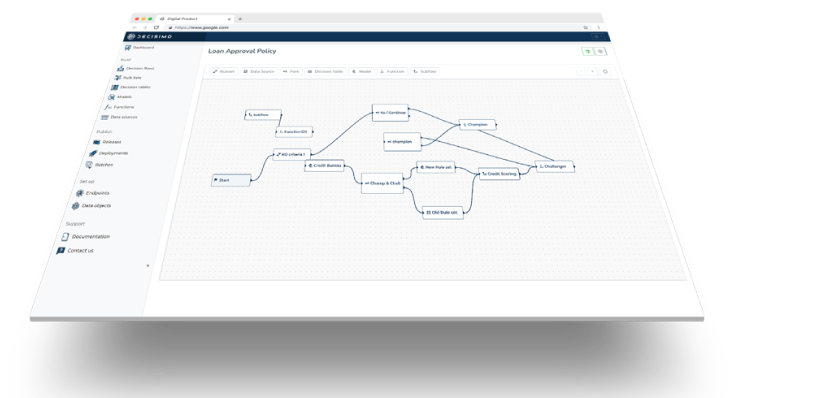
Champion-challenger testing is a practical way to improve collections and debt recovery processes. It compares multiple versions of a process or strategy to see which performs best. With that data, businesses can make decisions based on results, not guesswork.
Implementing Champion-Challenger Testing in the Collections Process
- Define the goal of the test. This may mean more payments, less time spent on collections, or better communication with customers.
- Set a clear hypothesis. State what changes you are testing and what outcome you expect.
- Choose the right sample size. That depends on the goal and the size of the customer base.
- Run the test and track the results. Measure payments, response rate, and any other relevant metric.
- Review the results and identify the strongest variation. Compare the champion and challenger, then decide whether to use the winning version in future collection efforts.
Experimenting to find the most effective strategy
One advantage of champion-challenger testing is that it lets businesses compare approaches using real results. For example, a business may test two email templates to see which one drives more payments on outstanding debts. By measuring the response rate for each template, the business can see which one works better and use it in future collection efforts.
Using champion-challenger testing to improve efficiency
Champion-challenger testing can also help businesses find bottlenecks in collection processes. A step may cause delays or stop customers from making payments. By testing different versions of that step, the business can identify the better approach and improve collection efficiency.
Improving communication: Testing messages and channels
Champion-challenger testing can also improve customer communication. By testing different messages and channels, businesses can see which ones work best at encouraging payments. That helps maintain customer relationships and improve debt recovery.
Implementing Champion-Challenger Testing
- Test different call scripts to see which one drives payments, such as a script that highlights the consequences of non-payment or one that focuses on the benefit of paying.
- Test communication channels to see which ones reach customers best, such as email on weekdays versus weekends.
- Use personalized messaging to adapt communication to customer needs and characteristics, such as personalized subject lines in emails.
- Test different times of day or week for sending messages to see when customers respond most, such as morning versus evening payment reminders.
- Compare different payment reminder emails, such as messages that offer a discount versus messages that do not.
- Test incentives that encourage customers to pay, such as a discount for timely payment.
- Compare different letters or mailers used to remind customers of outstanding debts, such as a friendly tone versus a formal tone.
- Test automated phone calls versus live agents for sharing payment information and support.
- Use champion-challenger testing to identify bottlenecks in the collection process and test different ways to improve efficiency.
- Test social media ads aimed at specific customer segments with messages that encourage payment.
Conclusion
Champion-challenger testing is a useful method for businesses that want to improve their collection and debt recovery processes. By testing different strategies and approaches, businesses can identify what works best for encouraging payments and improving communication. With a structured approach and clear tracking, businesses can improve collection efforts and recover more debt.