Setting up eligibility rules in credit lending
Published on: 2024-08-10 18:37:05
Whether your business is in traditional consumer lending or BNPL, your decision flow starts with eligibility rules.
Keep them simple at first. Set the minimum conditions clearly, and make sure they fit how you will later handle fraud detection.
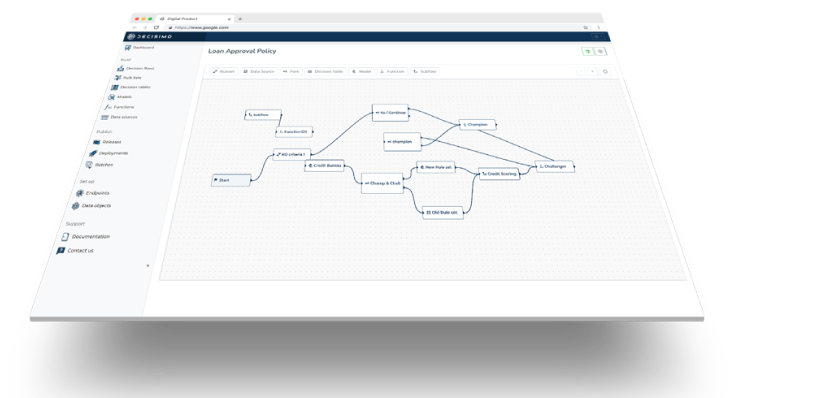
Start with the basics
Define what your business will lend against. Look at the product or service, the customer segment, and the level of credit risk you are willing to take.
The baseline for eligibility rules is regulatory requirements and hard limits, such as age and debt-to-income ratio. Use KO criteria only for regulatory rejects and other hard stops. Add a small set of explicit reasons to reject, such as age below the legal minimum, missing identity checks, sanctions hits, or failed KYC. Anything that does not pass KO criteria should stop there and not go on to external data checks. Paying for bad customers is not smart. For more context on policy design, see typical underwriting policy and the loan approval process.
Eligibility rules are also called KO rules or minimum eligibility requirements.
Whatever you call them, these rules sit at the start of your credit evaluation decision flow.
Keep the ruleset small
As the process matures, keep more rules at the edge and reduce the rule count where you can. Reserve scoring for cases with nuance. Scoring handles borderline risk better than rigid rules. Common examples include residence country, minimum income, bank account ownership, active phone number, valid email address, and no open default with your company. If your process uses open banking or bureau data, you can also check recent account activity, payment behaviour, and address consistency.
As scale increases, push simple checks to the edge of the system and keep the central ruleset smaller. The KO layer should stay focused on regulatory rejects and other hard stops. Scoring should handle the more nuanced decisions.
- You must be 18 years old
- You must be employed
- You must have a credit score of 650
- You must not have had any bankruptcies in the last 5 years
- You must not have any current loans with us
- Your debt-to-income ratio is X
- You must live in an eligible country
- You must have a valid bank account
- You must pass basic identity checks
- You must not be on an internal blocklist
- You must meet the minimum income threshold
Eligibility rules usually come first. Anti-fraud rules follow.
The main idea: keep the entry checks strict, clear, and small. Put nuance into scoring, and keep the ruleset easy to audit.