Credit risk strategy in micro-lending
Published on: 2024-08-10 18:37:05
Microlenders face several risks in lending, with credit risk at the center.
A credit risk strategy should reduce default probability and improve approval and repayment outcomes. It should be explicit, testable, and explainable in your decision logic.
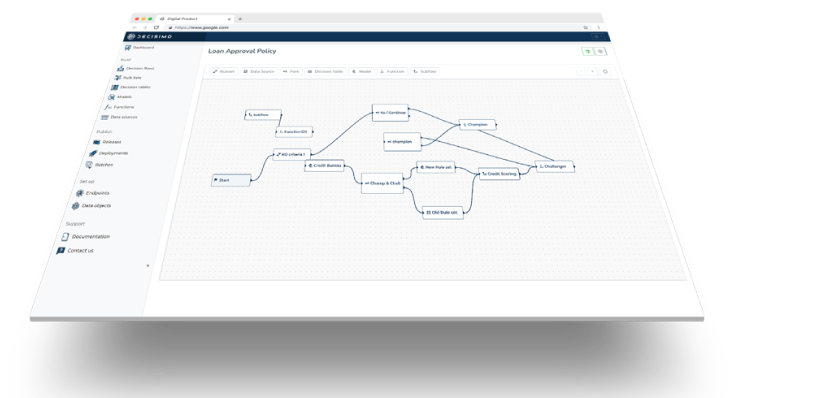
The first step is to identify the risk types you face. They fit into four groups:
- Business risks - Risks specific to the microlender, such as shifts in the economic environment or failures in internal processes.
- Country risks - Risks tied to the operating country, such as political instability or currency volatility.
- Sector risks - Risks tied to the industry you serve, such as regulatory changes or competitive pressure.
- Borrower risks - Risks specific to the borrower, such as changing cash flow, leverage, or fraud.
After you classify risks, define policies and procedures to mitigate them. Codify these as clear rules, decision tables, and controls so they can be tested and audited.
Policies should aim to lower default odds and raise the likelihood and speed of repayment.
Risk mitigation
Measures that reliably reduce credit risk include:
- Run structured credit analysis before approval.
- Require a personal guarantee when appropriate.
- Set a maximum loan-to-value ratio.
- Set a maximum loan term.
- Price risk explicitly. See risk-based pricing.
- Secure loans with collateral where warranted.
- Review the portfolio regularly to flag early signs of credit stress.
- Maintain a clear, tested loan loss provisioning policy.
- Apply a consistent collections policy for delinquent loans.
- Use alternative data to supplement credit analysis when validated.
Building a clear, measurable credit risk strategy helps microlenders manage exposure and improve approvals and repayments. Document decisions, log decision traces, and version rules to keep the process auditable.
What alternative data can be used in microlending
Use of alternative data in microlending has grown. It adds signals that traditional credit scoring may miss and can strengthen credit analysis when lawful, consented, and validated.
Common alternative data types include:
- Social media data - Data from platforms such as Facebook, Twitter, and LinkedIn. In some markets, it can indicate business presence or stability when used with consent and controls.
- Payment data - Data from platforms such as PayPal, Venmo, and Square. Transaction patterns can inform cash flow assessments.
- Bill payment data - Data from utilities, cable companies, and other service providers. Timely payments can signal reliability.
- Employment data - Data from job boards, payroll providers, and verified employer records. It can confirm income and tenure.
- Rental data - Data from rental listing platforms, landlords, and property managers. Consistent rent payments can indicate repayment discipline.
When validated, alternative data can increase predictive power and surface higher-risk cases earlier.
Risks of using alternative data for credit scoring of small businesses
Alternative data introduces specific risks. Two core categories matter most:
- Data quality risks - If data is incomplete, biased, or stale, analysis and outcomes suffer.
- Data security risks - If data is not properly secured, unauthorized access and breaches can occur.
Assess and control these risks before using alternative data in microlending.
Considerations around using alternative data
8 policy recommendations for the use of alternative data in micro-lending:
- Use alternative data collected legally and ethically, with documented consent where applicable.
- Publish a clear, transparent policy describing how alternative data is used in decisions.
- Validate data quality for accuracy, completeness, timeliness, and stability.
- Secure data with strong access controls, encryption, and monitoring.
- Limit use of alternative data to credit decisioning purposes stated to the borrower.
- Avoid discriminatory impact. Test models and rules for bias and fairness.
- Disclose when alternative data influenced a credit decision and explain the factors.
- Review and revalidate alternative data sources and rules on a regular schedule.