Implementing scorecards in rule engines
Published on: 2024-08-10 18:38:55
Implementing scorecards in rule engines is a standard part of automated decision-making, especially in areas such as credit lending. Scorecards help evaluate multiple factors and support consistent decisions. This guide gives a clear overview of how to implement a scorecard, using a credit lending example with bins, rule sets, decision tables, and scorecard modules.
Example Scorecard: Credit Lending
We will use a hypothetical scorecard for credit lending based on criteria such as sex, marital status, education level, delinquency level, number of repaid loans, and social network presence. The total score determines an individual’s creditworthiness.
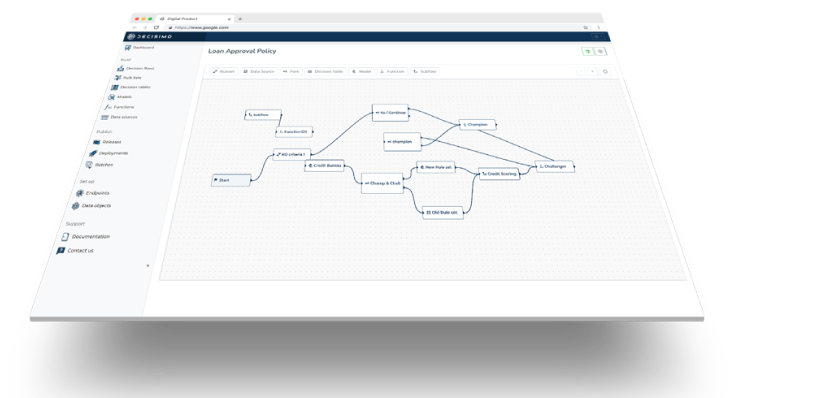
| Criteria | Category | Points |
|---|---|---|
| Sex | Female | 10 |
| Male | 8 | |
| Marital Status | Single | 5 |
| Married | 10 | |
| Divorced/Widowed | 7 | |
| Education Level | High School or Lower | 5 |
| College/University Graduate | 10 | |
| Postgraduate | 15 | |
| Delinquency Level | No Delinquency | 15 |
| 1-2 Late Payments | 10 | |
| 3+ Late Payments | 0 | |
| Number of Repaid Loans | 0-1 | 5 |
| 2-3 | 10 | |
| 4+ | 15 | |
| Social Network Presence | Low (Rarely Active) | 5 |
| Medium (Occasionally Active) | 10 | |
| High (Very Active) | 15 |
Part 1: Using Rule Sets for Scorecard Implementation
Implementing Each Bin as a Rule:
To implement the scorecard with rule sets, use these steps:
- Rule Development for Each Criterion: Configure individual rules for each scorecard criterion. For example, assign 10 points for 'Female' and 8 points for 'Male' under the 'Sex' category.
- Points Aggregation: The rule engine aggregates points across all criteria to calculate a total score that reflects the applicant's credit profile.
- Systematic Validation: Set up a validation process to confirm that each rule correctly represents its scoring criterion.
Challenges in Rule-Based Implementation:
Implementing scorecards through rule sets brings several challenges:
- Complexity Management: Managing a large number of rules, especially for detailed criteria, can become difficult and error-prone.
- Consistent Rule Management: You need a clear framework to manage rules and keep them consistent.
- Regular Updates and Testing: Rules need updates and testing as criteria or scoring strategies change, so the engine stays reliable.
Part 2: Utilizing Decision Tables for Scorecard Implementation
Decision Table for Each Category:
When implementing scorecards with decision tables, focus on these steps:
- Separate Tables for Each Criterion: Create a separate decision table for each category, such as 'Marital Status,' with rows for 'Single,' 'Married,' and other values, plus their points.
- Scoring Logic Integration: Configure each table to output points from the input criteria, then sum those points to produce the total score.
Advantages of Decision Table Implementation:
Decision tables provide clear benefits for scorecard implementation:
- Clearer Logic: They provide a clear format that reduces the chance of errors in scoring logic.
- Simpler Maintenance: Updating scorecard logic is easier, which makes ongoing maintenance simpler.
Part 3: Implementing Scorecards with a Scorecard Module
Using a Dedicated Module:
To implement a scorecard with a dedicated module, follow these guidelines:
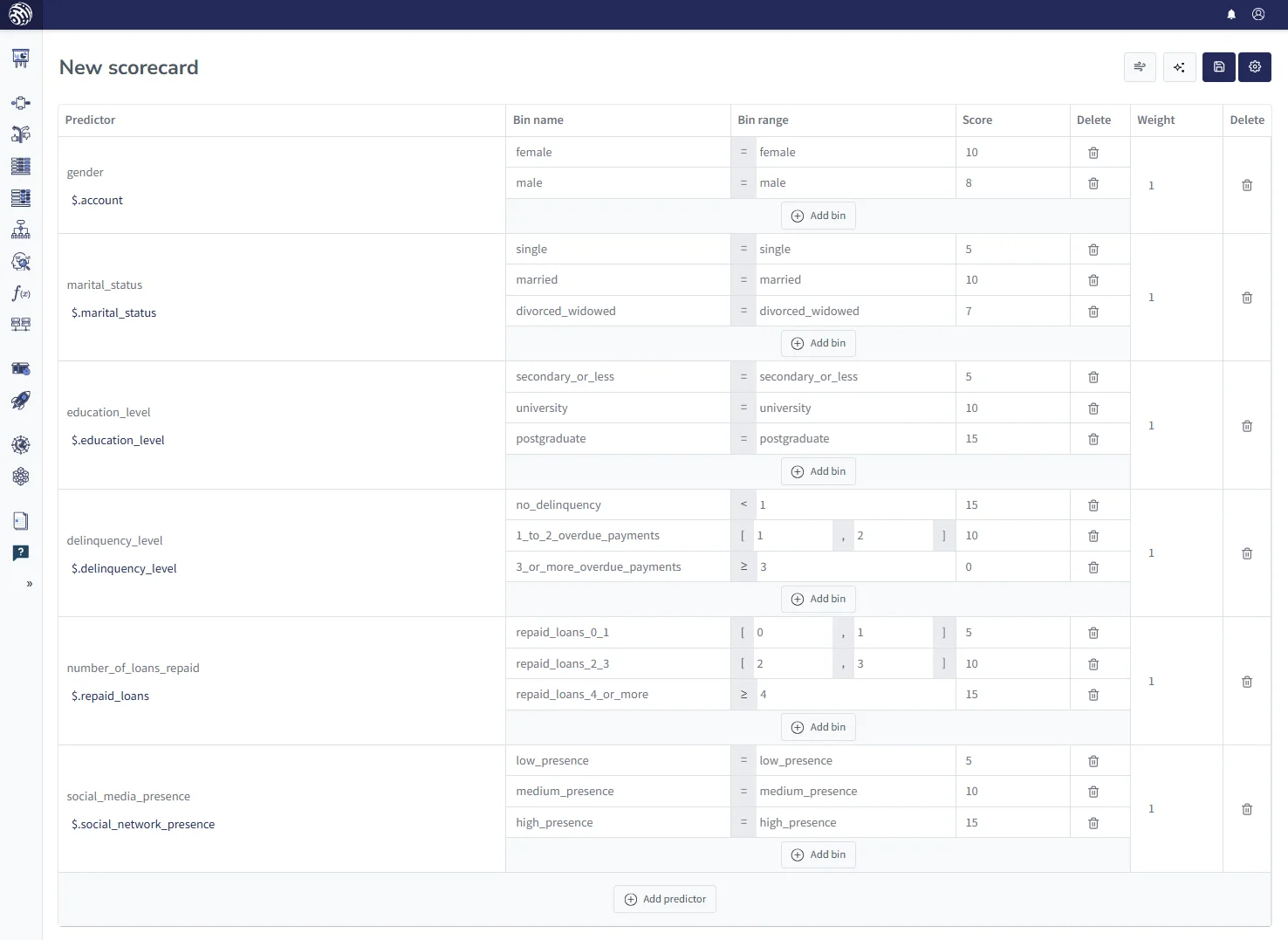
- Direct Input of Criteria: Enter the scorecard bins and scoring rules directly into the module for automated processing.
- Automated Score Calculation: The module calculates the total score automatically based on the defined criteria, which simplifies the scoring process.
Best Practices for Scorecard Module Implementation:
To get the most from your scorecard module, follow these practices:
- Use Built-in Functions: Use the module’s features to implement the scorecard efficiently and accurately.
- Ensure Regular Updates: Keep the scorecard current as criteria or scoring methods change to maintain accuracy and relevance.
Conclusion
Implementing a scorecard in a rule engine can be done in several ways, and each approach has its own strengths. Whether you use rule sets, decision tables, or a dedicated scorecard module, the right choice depends on your organization’s needs and the scorecard’s complexity.
Decisimo offers a platform that can be configured to implement scorecards in different ways. To learn more about Decisimo’s rule engine and how it can help automate your decision-making, contact us.