Metrics to Monitor in Lending and Credit Underwriting
Published on: 2026-03-28 00:42:23
In lending and credit underwriting, small delays create real business costs. An applicant who starts a form but takes too long to finish may abandon it. A creditworthy borrower who waits too long for a decision may accept an offer elsewhere. A customer who receives an approval but does not get funds fast enough may lose trust in the lender.
That is why lending teams monitor a small set of operational metrics across the underwriting journey. Four of the most useful are time to fill, time to decision, time to money, and approval rate. Together, they show how efficiently your underwriting process works, where friction sits, and how well your decision logic converts applications into funded loans.
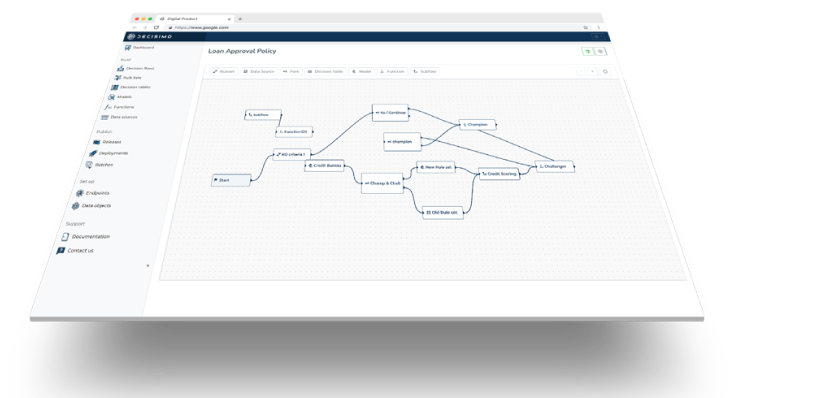
These are not vanity metrics. They affect revenue, acquisition efficiency, risk operations, and customer experience. They also show whether your underwriting process is ready to scale. If your team reviews applications manually, routes exceptions by email, or relies on disconnected systems, these metrics will show the cost fast. For lenders building automated decision logic, they are some of the clearest indicators of progress.
If you are mapping or redesigning your underwriting process, it helps to start with the full workflow. Our guide on automating the loan approval process breaks that down in more detail.
Why underwriting metrics matter
Underwriting sits at the point where risk policy meets customer demand. You need to assess affordability, fraud risk, eligibility, and credit quality. At the same time, you need to keep the process fast enough to win business.
That balance is hard to manage without measurement. A lender may think approvals are slow because risk checks are too strict, when the real issue is a long application form. Another lender may think the funnel is healthy because approval rate looks strong, while funded volume suffers because payouts happen too late. Looking at one metric in isolation leads to poor decisions.
The right metrics help teams answer practical questions:
- Is the application journey easy to complete?
- How long does underwriting take once data is submitted?
- How long does it take for approved applicants to receive funds?
- How many applicants are accepted under current policy rules?
Each question points to a different part of the lending journey. That is why these metrics must be tracked separately.
Time to fill
Time to fill measures how long it takes an applicant to complete and submit an application.
This usually starts when the applicant begins the form and ends when they submit all required information. Depending on the product, that may include personal details, employment data, income, expenses, identity data, and consent for bureau or open banking checks.
Why it matters
Time to fill is a direct measure of customer friction. If the form is long, confusing, repetitive, or asks for data that applicants do not have ready, completion time rises. In many cases, abandonment rises with it.
For digital lenders, this metric has a major effect on acquisition efficiency. You already paid to bring the applicant into the funnel. If the process takes too long to complete, you lose applicants before underwriting even starts.
What increases time to fill
- Too many required fields
- Poor mobile experience
- Repeated questions across screens
- Manual document upload steps
- Requests for data that could be prefilled or fetched through integrations
- Weak user interface design
What good performance looks like
Good time to fill depends on product complexity. A short-term consumer credit product will have a very different benchmark from a business lending application. The point is not to hit one universal number. The point is to reduce avoidable friction without weakening risk controls.
Many lenders improve this metric by simplifying eligibility checks upfront, pre-populating data where possible, and using external data sources instead of asking the applicant to provide everything manually. If you want to review available integration options, see data sources you can use.
Time to decision
Time to decision measures how long it takes from application submission to an underwriting decision.
This is the core operational metric for underwriting itself. It reflects how quickly your systems and teams can evaluate the application, run decision rules, call external data providers, apply scorecards, review exceptions, and produce an approve, decline, or refer outcome.
Why it matters
Time to decision affects both customer experience and conversion. In many lending markets, speed is part of the product. If one lender can return a clear decision in seconds and another takes hours, the faster lender has an obvious advantage.
It also affects internal cost. Manual reviews, fragmented workflows, and unclear exception handling all push this number up. Automated decision logic reduces delay by routing straightforward cases automatically and sending only true edge cases to manual review.
What increases time to decision
- Manual underwriting queues
- Disconnected fraud, identity, and credit checks
- Slow third-party API orchestrations
- Frequent policy exceptions
- Unclear referral rules
- Lack of traceability in decision logic
How to improve it
The first step is to separate standard cases from exceptions. If most applications follow repeatable policy rules, they should not wait for manual handling. Lenders that implement deterministic decision logic can evaluate applications consistently, trace every rule used, and reduce queue time without turning underwriting into a black box.
For a practical look at rule structure, see working with basic rules and implementing scorecards in rule engines.
Time to money
Time to money measures how long it takes from application start, or more often from approval, to the moment funds reach the borrower.
This metric extends beyond underwriting. It includes final acceptance, contract generation, e-signature, compliance checks, disbursement setup, payment operations, and banking rails. Even so, underwriting has a major influence on it. If decisioning is slow or approvals require repeated manual intervention, time to money will rise.
Why it matters
This is the metric customers feel most clearly. Borrowers do not experience your process as separate operational stages. They care about one outcome: how fast they can get money.
That makes time to money a competitive metric, not just an operational one. In consumer lending, BNPL, and many small business lending cases, lenders often compete on convenience and speed as much as on price. A shorter time to money improves conversion, customer satisfaction, and repeat usage.
Common causes of delay
- Slow manual verification after approval
- Disjointed handoffs between underwriting and operations
- Late-stage document collection
- Batch disbursement processes
- Payment provider limitations
- Extra reviews triggered by weak decision logic upstream
If fraud checks and onboarding controls are not designed properly, lenders often push risk work to the end of the journey, which delays payout. It is better to orchestrate those checks earlier in the decision flow. Related reads include preventing identity and synthetic fraud in consumer lending and anti-fraud decision logic for consumer lending.
Approval rate
Approval rate measures the percentage of applications that receive an approval decision.
At first glance, this looks simple. But it needs context. A high approval rate is not always good, and a low one is not always bad. The number reflects your acquisition strategy, eligibility policy, fraud controls, affordability thresholds, credit risk appetite, and application quality.
Why it matters
Approval rate tells you whether your credit policy and front-end funnel are aligned. If marketing brings in applicants who rarely meet eligibility criteria, approval rate drops. If fraud screens are weak, approval rate may look healthy while losses rise later. If policy is too restrictive, you may reject profitable borrowers and reduce growth.
This metric becomes much more useful when segmented by channel, product, customer type, score band, and referral source. A single headline number can hide major differences underneath.
How to interpret it properly
- High approval rate can mean strong applicant quality, but it can also mean loose policy.
- Low approval rate can mean disciplined risk selection, but it can also mean poor targeting or unnecessary friction.
- Stable approval rate with slower decisions may indicate growing manual workload.
- Rising approval rate with rising losses may indicate policy drift.
Approval rate should always be reviewed alongside downstream risk and performance metrics such as default rate, fraud rate, and early delinquency. It should also be reviewed with underwriting speed metrics, because a process that approves the right borrowers too slowly still loses business.
The differences between these metrics
These four metrics are related, but they measure different parts of the lending journey.
- Time to fill measures applicant effort before submission.
- Time to decision measures underwriting speed after submission.
- Time to money measures end-to-end speed to funding.
- Approval rate measures policy outcome, not speed.
That distinction matters. A lender can have a fast decision engine but poor time to fill because the application journey is too long. Another can have a strong approval rate but poor time to money because payout operations are slow. Another may fund quickly after approval but still lose applicants because manual reviews delay decisions.
In other words, these metrics answer different questions:
- How easy is it to apply?
- How fast do we assess risk?
- How quickly do approved borrowers get funds?
- How many applicants do we accept?
You need all four to understand underwriting performance properly.
Why these metrics create competitive edge
During underwriting, competitive edge comes from doing 2 things at once: making sound risk decisions and making them fast.
That is harder than it looks. Many lenders can write policy rules. Fewer can operationalize them in a way that is consistent, traceable, and fast across large application volumes. That is where underwriting metrics matter most.
When lenders improve time to fill, they reduce abandonment and increase completed applications. When they improve time to decision, they convert more eligible applicants before competitors do. When they improve time to money, they create a better borrower experience and increase trust. When they manage approval rate well, they align growth with risk appetite.
Together, these metrics shape unit economics and market position. Faster and clearer underwriting means lower operational cost, better conversion, and a stronger customer proposition. In markets where products look similar, that matters.
This is also where deterministic decision logic has real value. If underwriting decisions follow explicit rules, decision tables, scorecards, and traceable API orchestrations, teams can improve speed without losing control. Every rule can be audited. Every decision trace can be reviewed. Policy changes can be tested before deployment. That is difficult to achieve with fragmented manual processes.
For a closer look at explainability in decisioning, see tracing models and decisions.
How to use these metrics in practice
To make these metrics useful, lenders should define them precisely and track them consistently.
Practical guidelines
- Set a clear start and end point for each metric.
- Measure medians and percentiles, not just averages.
- Segment by product, channel, and customer type.
- Separate automated decisions from manual referrals.
- Track trends over time after policy or workflow changes.
- Review speed metrics together with credit and fraud outcomes.
It also helps to map where delay enters the flow. Is it in the application form, the credit bureau call, manual document review, fraud screening, or payout operations? Once those bottlenecks are visible, teams can redesign the decision flow with more precision.
If you are replacing manual underwriting, our article on 7 steps to replace manual underwriting with automated decision logic is a useful next step.
Final thought
Lending teams often focus heavily on credit policy and loss performance. Those matter, but speed and conversion metrics during underwriting matter too. Time to fill, time to decision, time to money, and approval rate show whether your process is easy to complete, fast to evaluate, quick to fund, and aligned with policy.
Lenders that monitor these metrics well gain a real edge. They identify friction sooner, automate repeatable decisions more effectively, and serve good borrowers faster. In a competitive market, that is not a side benefit. It is part of the underwriting strategy itself.